Lane splitting is generally illegal in Georgia. State law prohibits motorcyclists from riding between lanes of traffic or between adjacent rows of vehicles. Although some riders view lane splitting as a way to navigate congestion, the practice can result in traffic citations and may complicate matters if an accident occurs.
Questions about lane splitting often arise after a crash or traffic stop, particularly because motorcycle accidents are dangerous and can result in serious injuries, insurance disputes, and questions about fault. Understanding what Georgia law allows and what it prohibits can help riders make informed decisions on the road and better understand how these issues may affect an accident claim.
Table of Contents
What Are Motorcyclists Allowed To Do on Georgia Roads?
Under Georgia Code § 40-6-312, motorcyclists are entitled to the full use of a lane. However, riders may not operate a motorcycle between lanes of traffic or between adjacent lines or rows of vehicles.
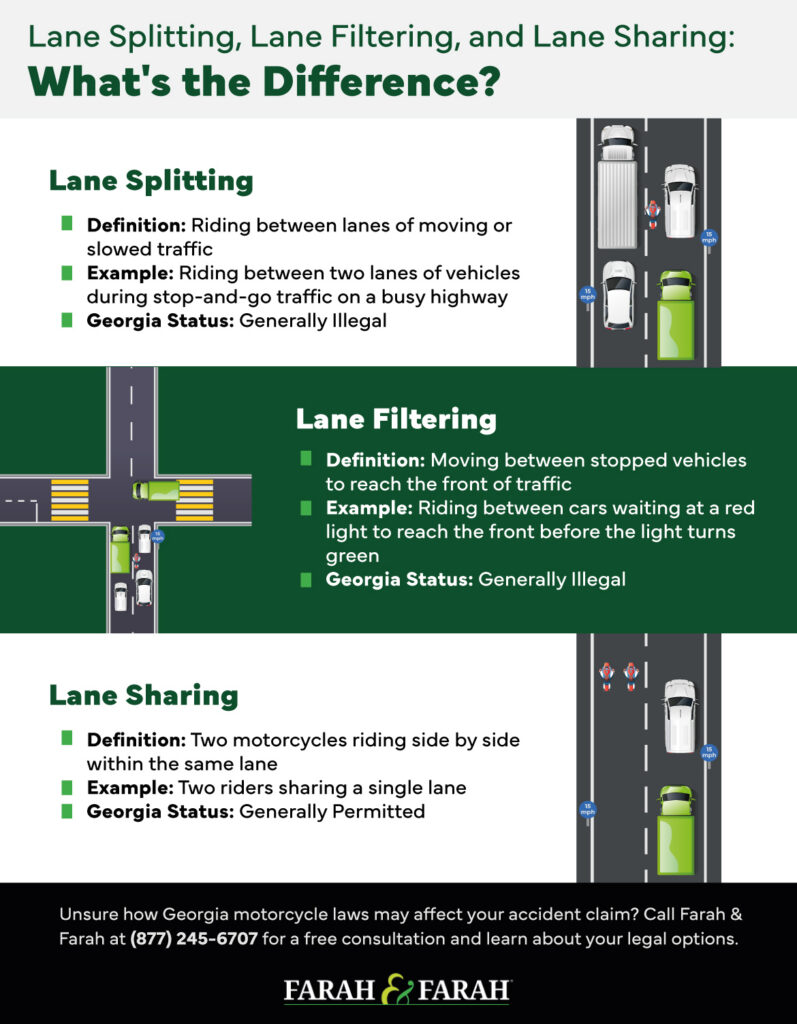
That said, some motorcycle practices often confused with lane splitting are allowed. For example, riders may use an entire lane, or two motorcycles may ride side by side within the same lane. Both are legal. Terms such as lane splitting, lane filtering, and lane sharing are often used interchangeably, but they describe different riding maneuvers.
Because motorcycle laws vary from state to state, riders should be careful not to assume that practices permitted elsewhere are also legal in Georgia. Familiarity with Georgia law and safety tips can help riders better understand their responsibilities while sharing the road with other vehicles.
What Is the Difference Between Lane Splitting, Lane Filtering, and Lane Sharing?
Although these terms are often used interchangeably, they describe different riding behaviors. Lane splitting generally involves riding between lanes of moving or slowed traffic. Lane filtering typically refers to moving between stopped vehicles, often at intersections or in traffic jams. Lane sharing occurs when two motorcycles ride side by side within a single lane.
Because these practices are treated differently under Georgia law, understanding the distinction can help riders avoid confusion about what is and is not permitted on Georgia roads.
What Happens if a Rider Engages in Illegal Lane Splitting?
Lane splitting can result in traffic citations for motorcyclists who violate Georgia traffic laws. For example, a rider who travels between moving lanes of traffic during congestion or moves between stopped vehicles approaching an intersection may receive a citation.
The penalties vary depending on the circumstances, but a traffic citation may result in fines ranging from $100 to $500, along with court costs. Because lane-splitting violations are treated as moving violations, they may also add points to a rider’s driving record. Accumulating too many points can lead to a license suspension.
The consequences may extend beyond a traffic ticket or points on a driving record. If a crash occurs while a rider is splitting lanes, insurance companies may argue that the rider’s actions contributed to the collision. That does not automatically mean the rider is responsible for the accident. However, it can give rise to disputes over fault and complicate an insurance claim.


If you were injured in an accident due to someone else’s negligence, Farah & Farah is here for you. We’ve relentlessly fought for the right to compensation for our clients and their families since 1979.
How Lane Splitting Can Affect Accident Claims
When a motorcycle accident involves lane splitting, insurance companies often focus on the rider’s actions from the very beginning. Adjusters may argue that the rider violated traffic laws, created an unsafe situation, or contributed to the collision in an effort to reduce or deny compensation.
That does not automatically mean an injured rider cannot recover damages. Georgia follows a modified comparative negligence system, which means you may still be eligible for compensation even if you are found partially at fault for lane splitting. A driver may have made an unsafe lane change, failed to check their surroundings, or otherwise contributed to the collision.
Farah & Farah’s Georgia motorcycle accident lawyers understand that insurers often look for opportunities to place blame on motorcyclists, even when another driver’s negligence played a significant role in causing the crash. A thorough investigation can help establish what happened, identify all contributing factors, and protect a rider’s ability to pursue compensation.
Get Answers About Lane Splitting and Accident Claims
Questions about lane splitting often arise after a crash, when riders are trying to understand how Georgia law may affect their rights. While lane splitting in Georgia is generally prohibited, that does not automatically determine who is responsible for an accident or whether compensation may be available.
Farah & Farah helps injured riders investigate crashes, deal with insurance companies, and pursue compensation when another party’s negligence contributed to their injuries. Whether you are wondering whether motorcycles are allowed to split lanes or need guidance after a motorcycle or bicycle accident, our Georgia personal injury lawyers are ready to help.
Call (877) 245-6707 or contact us online to schedule a free consultation and learn more about your legal options.