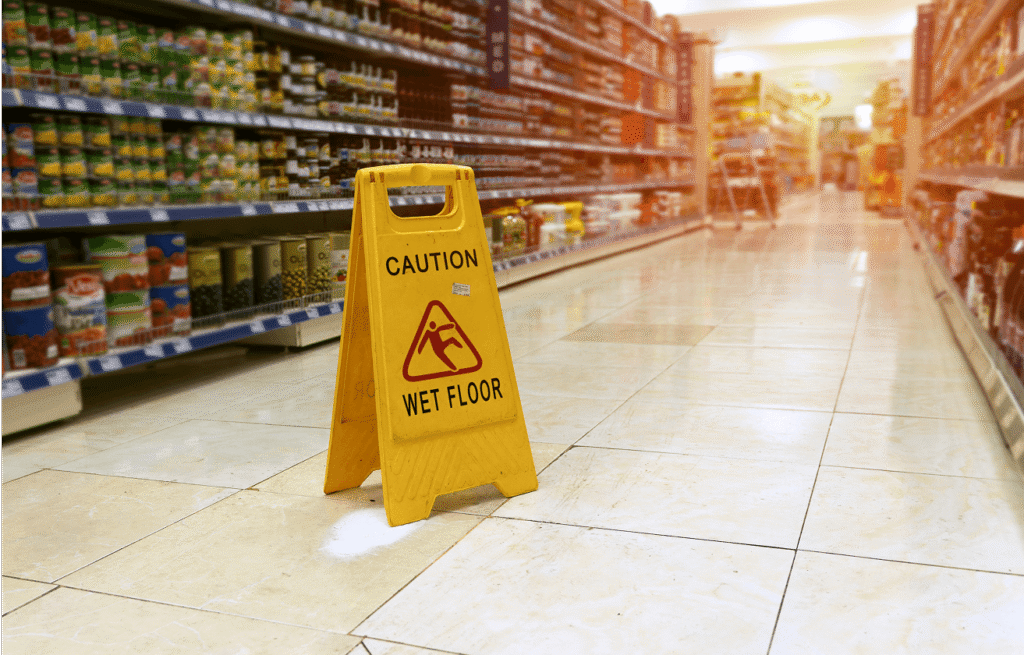
What you do in the minutes after a slip and fall can have a significant impact on your ability to pursue compensation. A leaking freezer, a spilled drink, a freshly mopped aisle, or another hazardous condition can leave you hurt and unsure of what to do next. Whether your accident happens in a small neighborhood grocery store, a big department store, or a massive warehouse club, knowing what to do afterward can help you protect your rights.
Even if your injuries seem straightforward, you shouldn’t assume that the business or its insurance company will automatically accept responsibility. They may try to argue that they were unaware of the hazard, that it hadn’t existed long enough for employees to address it, or that it was your own fault. In particular, large corporations often have systems in place to protect themselves quickly after an accident. Without evidence showing what really happened, proving liability for your fall can become a lot more difficult.
Steps To Take Immediately After a Slip and Fall Accident
The most important thing after any accident is your health and safety. Once you are out of immediate danger, the following key steps can help make a meaningful difference if you need to file a claim later.
1. Check for Injuries and Get Medical Help if Needed
Your first priority should be making sure you are safe and getting medical care if you need it. Even if you don’t think your injuries are that serious or you think you feel fine, don’t ignore pain or other symptoms. Some injuries are obvious, like broken bones, but others may not be noticeable for hours or even days afterward. It’s best to seek medical attention no matter what.
If you are feeling any of these symptoms, you should seek medical attention immediately:
- Head pain, confusion, dizziness
- Neck, back, hip, or shoulder pain
- Swelling, bruising, or trouble moving
- Numbness or tingling
- Pain that gets worse over time
Seeing a doctor documents your injuries, when they occurred, and what caused them. This official record can be extremely important when seeking a claim with the store’s insurance company. Any delay in seeking medical care may lead to the insurance company arguing that you were not seriously hurt or that your injuries were caused by something else entirely.
2. Report the Slip and Fall Accident Before You Leave
If you are physically able to, report the accident to a store manager before you leave. Whether you are in a small business or a large chain, it is extremely important to make an official report of what happened immediately.
Ask the manager to create a formal incident report. Make certain the report includes:
- The exact date and time of the accident
- The specific location where it happened – not just the store name, but aisle numbers and department names should be included
- A clear description of the dangerous condition that caused the accident
- The names of employees who came to assist you and clean up the hazard
Be sure to have a copy of the report before you leave. Some stores may refuse to provide you with the report, particularly large corporations. If that happens, write down the manager’s name, job title, and exactly what they told you. Make your own notes immediately after your conversation so you have a record of what happened.
When reporting the incident, keep your statements to the facts. Avoid guessing about what happened, apologizing for the situation, or saying anything that could be misunderstood as taking responsibility for the accident.
3. Gather Visual Evidence of the Hazard
Evidence in a retail store can vanish fast. Workers are trained to quickly mop up spills or put down warning signs after someone falls. While this is good for other shoppers, it means your proof can disappear in minutes. If you can, use your phone to take lots of photos and videos of:
- The exact puddle, liquid, piece of food, or object that caused your fall
- The floor around the area from a few different angles
- The lack of any warning signs or cones (or where they were placed)
- Any leaking freezers, broken displays, or messy boxes nearby
- The clothes and shoes you were wearing
- Any visible cuts, scrapes, or bruises
If you are too badly hurt to do this yourself, ask a friend, family member, or a helpful shopper nearby to take the pictures for you.
4. Find Witnesses and Get Their Contact Information
Witnesses can make a major difference if the store later disputes what happened. Other customers may have seen the fall, noticed the hazard before you fell, or heard employees make comments afterward.
Politely ask witnesses for:
- Their full name
- Phone number
- Email address
- A short description of what they saw
Witnesses often leave quickly, especially in busy stores. Getting their contact information while you are still at the scene may be your only chance to get their help.
5. Preserve Your Personal Items and Keep Documentation
The shoes and clothing you were wearing may become evidence, especially if they have liquid, grease, produce, dust, or other debris on them. Do not wash them. Instead, place them in a bag and store them somewhere safe.
You should also keep:
- Your store receipt
- Medical paperwork
- Prescription receipts
- Follow-up care instructions
- Emails or letters from the store or insurance company
- Notes about pain, missed work, and daily limitations
In addition to the incident report and visual evidence of the scene you have already saved, these items can help tell the full story of what happened after your fall. A store receipt can prove that you were lawfully in the store and establish the time you were there. This may be useful if surveillance footage needs to be requested later. Medical records, prescriptions, and follow-up instructions help connect your injuries to the fall and show the treatment you needed. Written communications and personal notes can also help document how the accident affected your daily life, your ability to work, and your recovery over time.
6. Do Not Post About Your Slip and Fall Accident on Social Media
It may feel natural to post about what happened, especially if the fall was upsetting or embarrassing. But social media posts can be taken out of context by insurance companies and defense attorneys.
Avoid posting:
- Photos of the accident
- Comments about how you feel
- Jokes about the fall
- Updates about your injury
- Statements blaming yourself or minimizing your pain
Even a simple post saying “I’m okay” could later be used to argue that your injuries were not serious. It is best to keep the details private and speak with an attorney before discussing the incident publicly to avoid a social media post impacting your claim.
7. Be Careful When Talking to Claims Adjusters
After a slip and fall in a store, you may be contacted by a claims representative, insurance adjuster, or corporate risk management department. This is especially common after falls at large retailers and major chains.
These representatives may sound polite and helpful, but their goal is often to limit what the company pays. They may ask for a recorded statement, request access to medical records, or offer a quick settlement before you know the full extent of your injuries.
Be careful to avoid:
- Giving a recorded statement too soon
- Signing medical authorizations without legal guidance
- Apologizing or saying the fall was your fault
- Guessing about how long the hazard was there
- Downplaying your pain or injuries
- Accepting a quick settlement before treatment is complete
It’s important to understand that accepting a settlement offer often requires signing an agreement that could prevent you from seeking additional compensation later. Insurance adjusters may encourage you to settle even before the full extent of your injuries is known or while you are still receiving medical treatment. Once you accept a settlement, you could be giving up the right to ask for more money later, even if your injuries turn out to be more serious than you initially realized.
How Liability Works in a Store Slip and Fall Case
Stores have a legal duty to keep their floors and walkways reasonably safe for customers. This means they are supposed to check the aisles regularly, clean up spills quickly, fix broken equipment, and post warning signs when the floor is wet. It’s the store’s responsibility to make certain merchandise or displays do not create dangerous conditions.
Just because you fell inside a store does not mean the store automatically has to pay you. In many store slip and fall cases, the key issue is whether the store knew or should have known about the hazard and then failed to fix it. To win a case, you generally have to show that:
- There was a dangerous condition on the floor.
- The store knew about it, or should have known about it if they were doing proper checks.
- The store failed to clean it up or warn you about it.
- The dangerous floor is exactly what caused your injury.
If a spill happened two seconds before you walked by, a court might say the store didn’t have enough time to fix it. But if a freezer was leaking for hours and no one mopped it up, the store can be held responsible. This is why photos, video, and witness statements are so important.
What To Know if You Fall in a Large Chain vs. a Smaller Store
The basic steps after a slip and fall are the same no matter where the accident happens. However, a fall in a large corporate chain can be different because the store may have access to information you can’t get on your own.
Larger retailers may have surveillance footage, cleaning logs, inspection records, employee schedules, maintenance records, and prior reports involving the area where you were injured. This information can be important because it may show how long the hazard was there, whether employees should have noticed it, or whether similar issues had happened before.
When Important Evidence Is in the Store’s Control
The challenge is that this evidence is usually controlled by the company, and it may not be volunteered during the claims process. Some footage may also be recorded over after a certain period of time. Because of this, you should not rely on the store to preserve everything simply because you reported the fall.
This is one reason it can be especially important to speak with a slip and fall attorney soon after an accident, especially at a large chain. An attorney can take steps to request that key evidence be preserved, including surveillance footage and store records. Acting quickly may help prevent important information from being lost, overwritten, or becoming harder to access later.
What Are Store Slip and Fall Settlements Based On?
People often search for information about grocery store slip and fall settlements because they want to know what their case may be worth. The truth is that settlement value depends on the specific facts of the case.
Factors that may affect a settlement include:
- How clear the proof is that the store made a mistake
- The severity of your injuries
- The cost of medical treatment
- Whether you missed work
- Whether you need future care
- How the injury affects your daily life
A minor fall with limited medical treatment will usually be valued differently from a fall that causes surgery, long-term pain, permanent limitations, or missed income.
When To Contact a Slip and Fall Accident Lawyer
You should consider speaking with a slip and fall lawyer if your injuries require medical treatment, cause you to miss work, or interfere with your daily life. It is also important to get legal guidance if the store denies responsibility, refuses to provide documentation, or if an insurance company contacts you for a statement.
A slip and fall attorney can help:
- Investigate what caused the fall
- Request and review store evidence, including surveillance footage, before it disappears
- Find and talk to witnesses
- Handle communication with insurance companies
- Determine the value of your claim
- Negotiate for a fair settlement
- File a lawsuit if necessary
Store slip and fall cases can be harder than they seem. Large businesses and insurers know how to defend against these claims and may move quickly to protect themselves. Having someone on your side can help level the playing field.
Farah & Farah Will Fight For You After a Store Slip and Fall
A slip and fall in a store can leave you dealing with pain, medical bills, missed work, and uncertainty about what comes next. Whether you were injured in a grocery store, a department store, a warehouse club, a major retailer, or another store, taking the right steps can help protect your health and your claim.
You do not have to deal with the store, corporate claims department, or insurance company alone. If you were injured because of unsafe conditions in a store, our experienced premises liability attorneys will fight to protect you. Contact Farah & Farah today for a free consultation. You won’t have to pay a dime unless your case is successful.