
Ensure Pedestrian Safety
Pedestrians are particularly vulnerable on U.S. roads, and they are at a high risk of serious injury or death when struck by a car. Some pedestrians, such as children and senior citizens, are at a higher risk of being in a pedestrian accident. Pet owners, college students, and runners also face unique risks and should take extra precautions.
Drivers and pedestrians both share a legal duty to prevent pedestrian accidents by following traffic laws and being alert at all times. You cannot predict when a driver might drive distracted, violate traffic laws, and put you in danger. You can keep yourself safe by following pedestrian laws, and following the tips in the pedestrian safety guide below.
Pedestrian Accident Statistics
Being struck by a car is a serious accident that can have lifelong repercussions. A human being is no match for a motor vehicle weighing 4,000 pounds or more, even if the vehicle speed is slow. At higher speeds, however, being struck by a car will almost certainly result in catastrophic injuries, or even death, for the pedestrian. The National Highway Traffic Safety Administration reports that a pedestrian is killed in a traffic accident once every 70 minutes. In 2022, 7,522 pedestrians were killed in accidents on the nation’s roadways, and 67,000 were injured.
Pedestrians and Drivers Must Work Together To Promote Pedestrian Safety
Pedestrian safety is everyone’s responsibility. Drivers put pedestrians at risk when they speed, text and drive, drive drunk, or make careless mistakes. Pedestrians can put themselves at risk by not paying attention, disobeying the law, or crossing the street in inappropriate places.
Pedestrian Safety Tips
- Stay alert and keep your eyes focused ahead.
- Avoid looking at your phone while walking or listening to loud music that keeps you from hearing the sounds in your environment.
- Walk on sidewalks or, if none are available, as close to the side of the road as possible, facing traffic.
- In downtown areas, cross only at crosswalks and obey pedestrian crossing symbols.
- If there are no marked crosswalks, cross only at intersections and obey stop signs and traffic signals.
- Never cross the street diagonally, but cross where the distance across is the shortest.
- Always watch for cars backing out of driveways or turning right.
- Never assume a driver sees you or will stop, even if there is a stop sign or you have the right of way.
- Try to make eye contact with the driver and wait for the car to come to a complete stop.
Do everything you can to increase your visibility. Wear brightly colored clothing during the day. Wear reflective clothing and carry a flashlight at night. This can also help you avoid tripping and falling. Try to stick to well-lit areas. Walking with a companion or group is one of the better ways to increase your visibility.
Tips for Driving Without Endangering Pedestrians
It only takes one careless mistake for a driver to hit a pedestrian and cause serious injuries or death. The following tips can prevent pedestrian accidents and save lives:
- Always watch for pedestrians, especially near schools, daycare centers, parks, residential neighborhoods, bus stops, and downtown areas.
- Slow down as you approach marked or unmarked crosswalks and look in all four directions for pedestrians.
- Drive with pedestrian awareness.
- Yield to pedestrians on the road even if they aren’t supposed to be there.
- At crosswalks, stop before any part of your vehicle enters the marked area.
- Never pass a stopped school bus loading or unloading passengers.
- Never pass another vehicle stopped at a crosswalk for pedestrians.
- Don’t back up until you are certain there are no pedestrians in your blind spots.
Does a Pedestrian Always Have the Right of Way?
Pedestrians don’t always have the right of way. They must obey stop lights, stop signs, and crossing signals. Pedestrians in Florida must yield to cars when crossing anywhere other than a marked crosswalk or an intersection with an unmarked crosswalk. However, every driver must yield to pedestrians once they enter the roadway even if they violate your right of way.
What Laws Protect Pedestrians in Florida?
Section 316.130 of Florida’s State Uniform Traffic Control laws requires drivers to exercise reasonable care to avoid colliding with pedestrians. Mandatory safety measures include leaving pedestrians plenty of room at crosswalks, yielding to them at marked and unmarked crosswalks, and yielding to them when they are already in the roadway, regardless of whether they are there legally. The law also prohibits drivers from passing vehicles stopped for pedestrians at crosswalks.
On the other hand, the law holds pedestrians responsible for obeying traffic laws, using sidewalks, crossing at crosswalks and intersections, and avoiding darting out in front of cars.
Do You Need To Yield To Pedestrians in Unmarked Crosswalks?
Yes, you must stop and yield to pedestrians in unmarked crosswalks at intersections, regardless of whether there are any traffic control devices.
Safety Tips for Different Types of Pedestrians and Vulnerable Roadway Users
The same safety rules apply to all pedestrians, and vulnerable roadway users, but some must take additional precautions to protect their safety based on their circumstances.
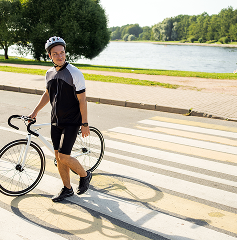
Bicyclists
Bicyclists face unique risks on the road because they are as vulnerable to severe injuries as pedestrians but share the roadway with cars more often. To stay safe while riding your bike, ride in designated bicycle lanes or as close to the right side of the road as possible. Obey traffic lights, stop signs, and traffic laws. Use hand signals to notify drivers when you’re turning. If riding on a sidewalk, obey pedestrian crossing signals and yield to pedestrians.
Wear bright clothing during the day. At night, wear reflective clothing and only ride a bike equipped with front and rear lights and reflectors. In Florida, you must have a front reflector with a white light visible from at least 500 feet and a rear reflector with a red light visible from at least 600 feet.
Hold the handlebars with both hands and stay focused on the road. Watch for grates and drains that could sink your tires, car doors opening, and cars backing or turning into your lane. Ensure your tires, brakes, and lights are in good working order before riding. Wear a bicycle helmet to minimize the risk of serious head injuries should an accident occur.

Runners
You may find it difficult to stop and watch for cars when running because you’re focusing on your workout. However, it is crucial to follow the same rules as other pedestrians, such as stopping and checking for traffic before crossing, even if you must run in place for a few minutes. Wear bright clothing during the day and reflective clothing at night. If you use earbuds to listen to music, keep the volume low enough to allow you to hear traffic sounds. Remain alert to your environment and watch for cars backing out of driveways or turning onto the road in front of you.

Senior Citizens
The effects of aging can increase your risk of accidents while walking. You may not be able to move as fast as you could when you were younger, making it take longer to cross the street. Your eyesight may not be as sharp as it once was, and you may find it easier to lose balance. You may still be able to walk safely, but you will need to take additional precautions to keep yourself safe, such as the following:
- Give yourself more time than you need to arrive at your destination.
- Avoid rushing or running across the street. Only start when you know you’ll have enough time to make it across at a comfortable pace.
- Avoid walking in areas with heavy traffic and complex intersections.
- Use a cane if you have difficulty balancing.
- Try to do all of your walking during the day.
- If you must walk at night, walk in well-lit areas.
- Carry your phone with you.
- Tell a loved one when and where you’ll be walking.
- Walk with a companion or in a group, if possible.

College Students
When walking on campus or in the neighborhood surrounding your college, you may have a larger percentage of young drivers around you who are less experienced and more willing to take risks than older drivers. They may be more distracted or in a rush to get to class. It’s just as important to use crosswalks and sidewalks on a college campus as anywhere else. In areas without sidewalks, walk facing traffic, but avoid walking in bicycle lanes. In parking lots, watch for white backup lights and be aware of cars backing out or entering the parking lot.
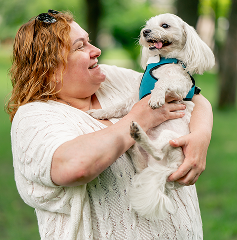
Pet Owners
Pet walkers have the added responsibility of keeping their pets safe. If possible, plan your route carefully to avoid other dogs. If your dog tries to chase squirrels, cars, or other objects, consider investing in training devices or obedience training.
Most importantly, make sure you maintain control while walking your dog. If your dog pulls on the leash or reacts suddenly to unexpected distractions, it could get away, or you could lose control of the situation. You or your dog could end up in the street at the wrong time and get hit by a car. Train your dog to walk beside you without pulling. Over time and with consistency, your dog can even learn to stop at intersections and crosswalks.
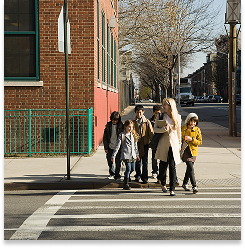
Children
The most effective way to instill safe walking habits in children is to walk with them and lead by example. Show your child how to push the button at crosswalks and the meanings of each crossing signal. Instruct your child to walk and not run across the street. Teach them to stop, look, and listen before crossing.
If your child walks to school, they may encounter crossing guards. Instruct your child to only cross when the crossing guard says it’s safe. If possible, have your child walk to school with a friend or in a group. Walk the route with your child to ensure it is safe. Teach your child to walk or run from strangers who approach them. If possible, identify the homes of people you know that can serve as safe places to stop during emergencies.
Teaching children pedestrian safety can translate to other activities like playing in the park or yard. Teach your child to let an adult retrieve a ball or toy that ends up in the street rather than running out and getting it themselves.
What to Do if You or a Loved One Is Injured in a Pedestrian Accident
If you or your loved one is in a pedestrian accident, our experienced Florida pedestrian accident lawyers can help you recover compensation for your medical expenses, lost wages, pain and suffering, and more. Your top priority is to seek medical attention promptly and follow your treatment plan. Collect any evidence you can, including the driver’s information, photos of the scene, and eyewitness contact information. Save your medical bills and payment receipts, and contact an attorney as soon as possible.