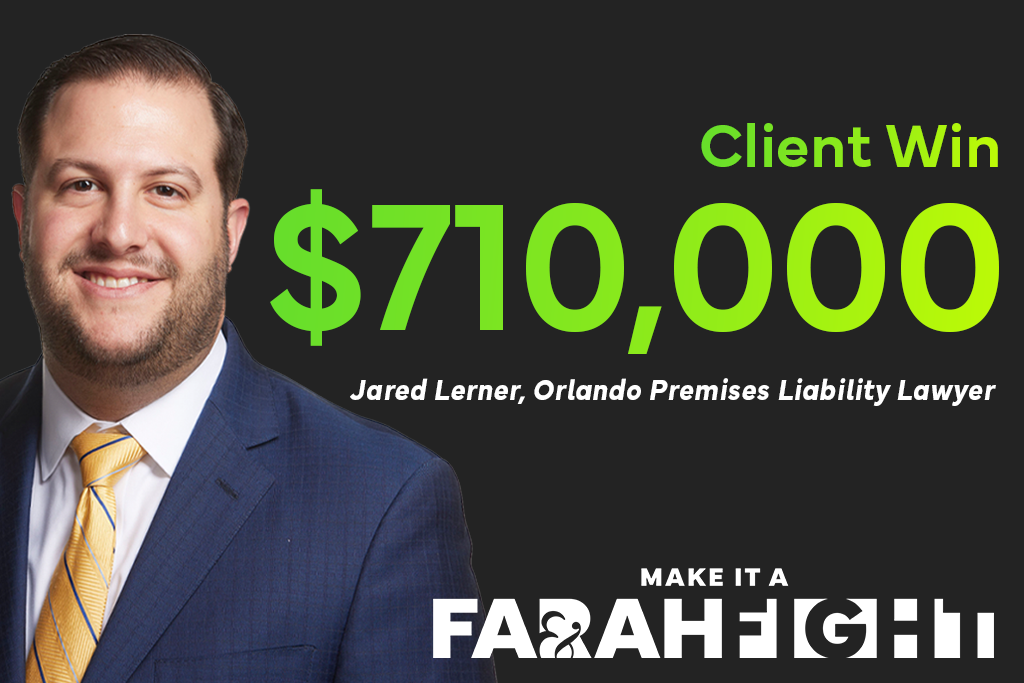
What should have been a routine moment on a quiet Florida farm turned into a life-altering tragedy. A farmhand helping to euthanize a sick horse was given unsafe instructions that left him permanently blind in one eye. The defense tried to hide behind Florida’s equine liability laws. Still, the Farah & Farah team, led by personal injury attorney Jared M. Lerner and his Orlando trial team, uncovered the negligence they hoped would stay buried and secured a $710,000 settlement for our client.
A Routine Call With a Catastrophic Outcome
Our client, a 57-year-old horse hand in Marion County, knew the rhythms of barn life, cleaning stalls, washing horses, and pitching in wherever needed. On the day everything changed, a horse in one of the stalls showed signs of colic. The vet was called, examined the animal, and decided euthanasia was necessary. He chose a quiet spot near the woods behind the barn and asked our client to help move the horse and hold the lead rope during the procedure.
The client had prior experience assisting, and professionals had previously assigned him to stand at the 11 o’clock or 1 o’clock positions in relation to the horse’s head. He also understood the hierarchy in moments like this. The veterinarian is the knowledgeable expert and directs the procedure. When he was instructed to stand at 9 o’clock instead, he did not question the directive.
When the vet performed the injection, there was no slow sagging and no chance for anyone to sidestep. The horse suddenly collapsed toward our client, driving him to the ground, where he hit his head, tearing his retina. Surgery followed, but the damage was permanent. He is now legally blind in one eye and cannot drive.
A Preventable Workplace Hazard
Although our client had assisted with euthanasias before, the veterinarian is the professional and the expert. Regardless of how many times a layperson has helped, the vet’s role is to direct a safe procedure. In this case, the position the vet instructed was unsafe.
Accepted practice calls for the handler to stand on the same side as the vet so that the vet can guide the fall away from the handler. By placing our client opposite the vet, the risk of the horse falling onto him increased dramatically.
Navigating Florida’s Equine Law
From the outset, the defense leaned heavily on Florida’s Equine Activity Liability Act. The statute recognizes horses as unpredictable and often shields equine professionals from lawsuits. The defense twice moved to dismiss the case, citing this legislation. However, the law does include exceptions, and one of those exceptions is negligence.
When an equine professional does something a reasonably careful professional would not do, resulting in harm to someone, they can be held responsible. Directing the handler into the danger zone was exactly that kind of negligence. The defense clung to statute-based immunity for years, but the exception left a door open.
Securing the Right Expert
Finding the right expert was its own challenge. Florida’s equine community is small and close-knit, and few veterinarians were willing to testify against a colleague. The Orlando team, led by Jared Lerner, ultimately retained a respected equine veterinary expert from out of state who had prosecuted horse-related rule violations and understood both the medicine and the safety protocols. He confirmed the standard of care. The vet and handler should stand on the same side so the vet can guide the fall.
The defense argued that because our client had assisted before, he should have objected. The reality is simple. Handlers follow the veterinarian’s directions. Our client did exactly that.
Persistent Negotiation From $12,500 to $710,000
Jared and his team pressed forward through discovery and depositions. The veterinarian maintained he had done nothing wrong. During initial negotiations, the defense offered only $12,500, a figure that ignored the severity of a permanent loss of vision and the strength of the negligence claim.
During our presentation, we walked through the statute’s structure and highlighted the negligence exception that the defense had overlooked. The legal shield they relied on was not absolute.
Weeks later, the insurer returned to the table. With trial on the horizon, negotiations intensified. The parties went back and forth daily for a week. The case was finally resolved for $710,000 about three months before the scheduled trial date.
A Fair Settlement To Build a New Normal
The injury reshaped nearly every part of our client’s life. He lives alone in a rural area. Losing the ability to drive meant leaning on his sister and his ex-wife for rides to appointments and errands. They gave support generously, but it was support he never imagined needing. He worked with the Department of Blind Services to relearn daily skills and to adapt his phone for low vision.
Even with these adjustments, hazards remained. At work months later, he did not see a hole in the ground and fell. He injured his shoulder and foot and eventually needed surgery for a torn rotator cuff. The settlement helps cover medical care, adaptive technology, and the added costs that come with permanent vision loss. It also acknowledges the emotional toll of losing independence and the daily effort required to build a new normal.
Why This Win Matters
Complex statutes do not erase accountability. With persistence, rigorous legal analysis, and the right experts, negligence can be proven, even in unusual settings like a horse euthanasia. This result reflects Farah & Farah’s commitment to digging into the facts, mastering niche defenses, and securing meaningful compensation for people whose lives have been upended by preventable harm.
Get a Free Case Review
Injured in a complex incident? You’re not alone. Farah & Farah’s team of attorneys has experience with a wide variety of different types of cases and accidents. We’re committed to standing by our clients and helping them through the worst period of their lives. Contact Farah & Farah today for a free consultation. We are here to help you understand your rights and fight for the compensation you deserve, and you won’t owe a thing unless your case is successful.